
Tile Roof Systems: What to Know and How to Protect One in Florida
A tile roof, also called a tile roofing system, is a roof covered in overlapping concrete or clay tiles laid over a waterproof underlayment on a structural deck. Knowing how those layers work together is how a Florida homeowner chooses a tile roof, prices it honestly, and protects it for decades. The types of tile, the parts of the system, and the installation decide its benefits. Its lifespan and cost depend on the layer beneath the tile, and so do its care and repair. Florida adds wind, insurance, and community rules to each decision, and the manufacturers behind the tile complete the picture.


What Is a Tile Roof?
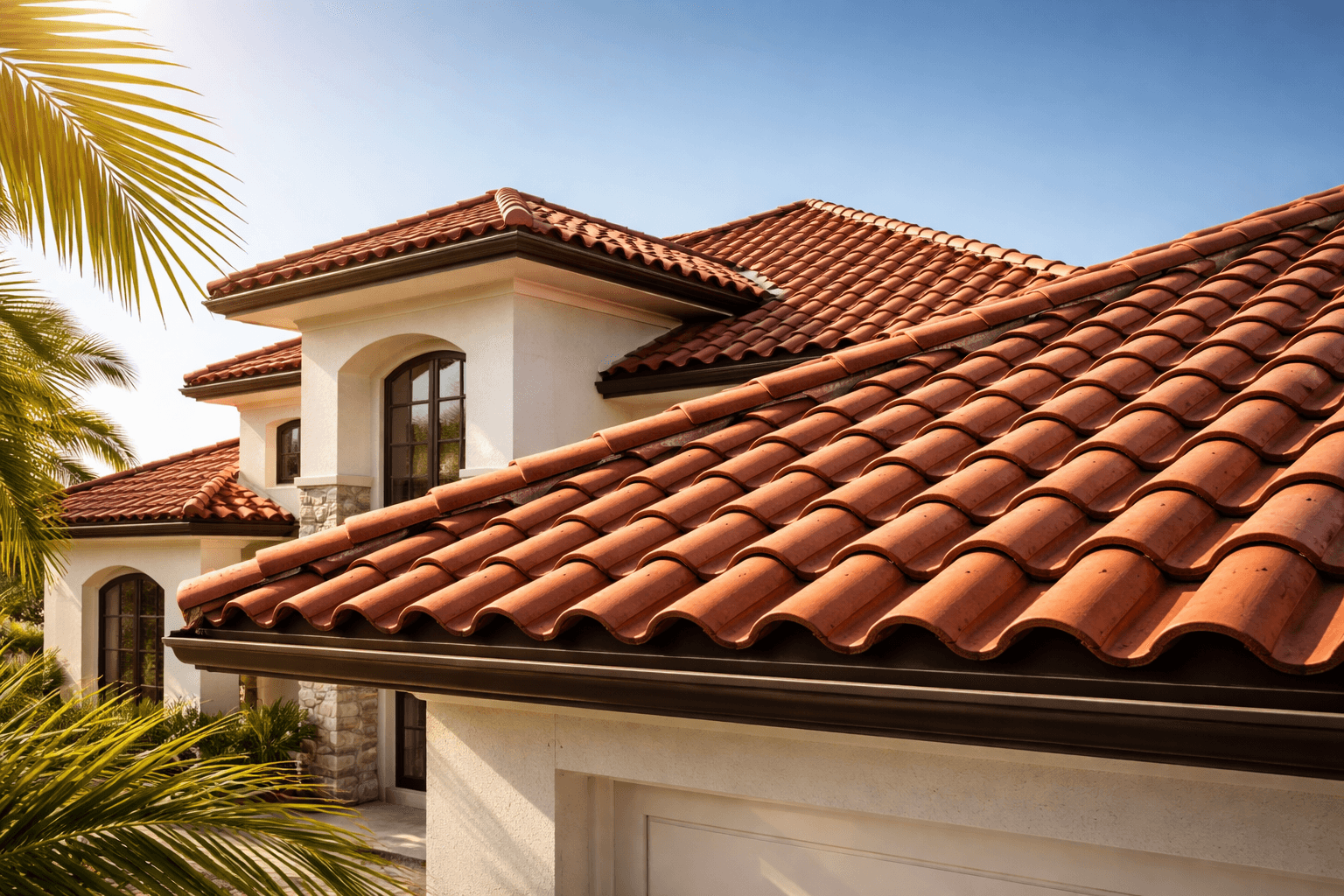
A tile roof is a roofing system of overlapping concrete or clay tiles fastened over a waterproof underlayment on a structural roof deck. The tile sheds most of the water and shields the layers below from sun and wind. The underlayment stops the water that gets past the tile.
Concrete roof tile is a mix of cement, sand, water, and oxide pigment, molded and cured. Clay roof tile is natural clay fired in a kiln, which gives it permanent color. Some homeowners call these products “tile shingles,” but tile and asphalt shingles are different coverings with different lifespans.
A tile roof works as a system. The membrane under the tile is what keeps a home dry, which is why roofers who work on tile every day call it “the real roof.” Every owner who wants to protect a tile roof should know how the tile roof underlayment is built and how old it is.
What Are the Types of Roof Tiles?
Roof tiles come in four main types: clay, concrete, slate, and synthetic. The four types of roof tile differ in weight, lifespan, cost, and fit for Florida.
Each roof tile type comes in several profiles. Barrel tile, also called Spanish or S tile, has the rounded profile of Mediterranean communities, while flat and interlocking profiles give a cleaner line. Pan-and-cover clay is a specialty install on high-end homes. Solar roof tiles are a solar product rather than roofing tile.
Clay, concrete, slate, and synthetic are the four types homeowners compare, and concrete and clay cover most Florida tile roofs. Our guide to roof tile types compares them in depth.
What Are the Parts of a Tile Roof System?
A tile roof system has six parts: the deck, the underlayment, the flashing, the attachment, the tile, and the ridge and hip mortar. Each part of a tile roof system has its own job and service life.
| Part | What it does | Typical service life |
|---|---|---|
| Roof deck | Structural base that carries the system | As long as it stays dry |
| Underlayment | Waterproof membrane that protects the deck | 20 to 30 years in Florida |
| Flashing | Metal that directs water at valleys, walls, and penetrations | Varies by metal and coastal exposure |
| Attachment | Foam adhesive or fasteners holding each tile | Varies by product generation |
| Roof tile | Outer covering that sheds water and blocks sun | Concrete 50 to 75 years; clay 75 to 100+ years |
| Ridge and hip mortar | Seals the peaks and hips | Needs maintenance around year 20 |
This table shows why the tile is rarely the first part of a tile roof to fail. RAVASA Roofing builds the underlayment as a two-ply system: a smooth self-adhered base, the flashing, a fleece-top second layer, and extra patches at every valley and penetration. Our guide to roof anatomy explains the layers of any roof.
What Are the Benefits of a Tile Roof?
A tile roof offers five benefits: long life, wind resistance, fire resistance, lasting color, and a cooler attic. The Tile Roofing Industry Alliance notes that tile resists water, wind, fire, and insect damage and holds its color for a very long time.
- Long life: a well-built Florida tile roof system lasts 25 to 50 years, and the tile itself lasts longer.
- Wind resistance: a tile roof installed to Florida code with the correct attachment resists wind uplift, as long as the installation is sound.
- Fire resistance: concrete and clay tile do not burn.
- Lasting color: clay tile keeps its fired color, and quality concrete tile fades far more slowly than asphalt shingles.
- A cooler attic: the air space beneath the tile slows heat moving into the attic.
In 33 years of storm work, Don Campbell has found that installation and age decide whether a tile roof survives a hurricane far more than the tile itself.


How Is a Tile Roof Installed?
A tile roof is installed foam-set, mechanically fastened, or with a hybrid of both, and the roof pitch decides which method applies. On a regular-pitch roof, tiles are set in foam on a fleece-backed underlayment that the foam bonds to. On a steep roof, tiles are screwed to battens over a smooth self-adhered membrane. Our guide to tile roof installation covers each method and Florida wind-zone rules.
RAVASA Roofing schedules the tear-off backward from tile delivery, so a re-roof moves from tear-off to finished tile in about 10 days instead of sitting dried-in for weeks. Our page on the tile re-roof process walks through each day.
How Long Does a Tile Roof Last?
25 to 50 years is how long a tile roof system lasts in Florida, even though the tile itself can last far longer. Concrete tile lasts 50 to 75 years and clay tile 75 to 100 years or more, while the underlayment lasts 20 to 30 years in Florida’s heat and humidity.
Why does the tile outlive the roof? The membrane wears out first, so a tile roof most often fails around the 25-year mark because the underlayment, flashing, or fasteners have worn out while the tile is still sound. In our experience, a tile roof with a two-ply underlayment and maintained mortar and flashing can reach about 40 years.
Our guide to how long does a tile roof last in Florida gives the full timeline. When the system reaches the end of its life, a tile roof replacement follows, and our page on tile roof replacement in Tampa Bay and Sarasota explains what that project includes.
How Much Does a Tile Roof Cost?
A tile roof costs $10 to $18 per square foot installed for concrete tile and $12 to $21 for clay tile in Florida. Per roofing square of 100 square feet, that is roughly $1,000 to $1,800 for concrete and $1,200 to $2,100 for clay.
In Lakewood Ranch, Don Campbell sees tile roof quotes from about $1,050 to $1,700 per square. RAVASA Roofing’s two-layer tile system runs $1,450 to $1,600 per square, and Lakewood Ranch tile re-roofs typically run $65,000 to $120,000.
The cost of a tile roof depends on the underlayment layers, the tile profile and material, roof access, tear-off, and decking repair. A two-layer system costs more because it adds a full membrane layer, and it carries a 20-year labor and material warranty from RAVASA Roofing instead of 10 years on a single-ply system. Our page on tile roof replacement cost breaks the price down by profile. Owners with sound tile and an aging membrane can compare the tile roof underlayment replacement cost in Florida, the cost of replacing only the membrane.
How Do You Maintain a Tile Roof?
You maintain a tile roof by inspecting it on schedule, repairing its mortar and seals, and keeping people and pressure washers off the tile. You should schedule the first professional inspection of a new tile roof around year 5. Ridge and hip mortar cracks over time, often where wet mortar met dry tile, and the seals at counter flashing need periodic attention. Our tile roof maintenance guide lists every do and don’t.
A tile roof should never be pressure washed. In our experience, pressure-washing crews break tiles and rarely tell the homeowner, so the damage surfaces later as a leak; our page on tile roof cleaning explains soft washing from a boom truck. Only your roofer should walk a tile roof, because foot traffic breaks the foam bond, and in golf communities one stray tee shot can crack three or four tiles.
Can a Tile Roof Be Repaired?
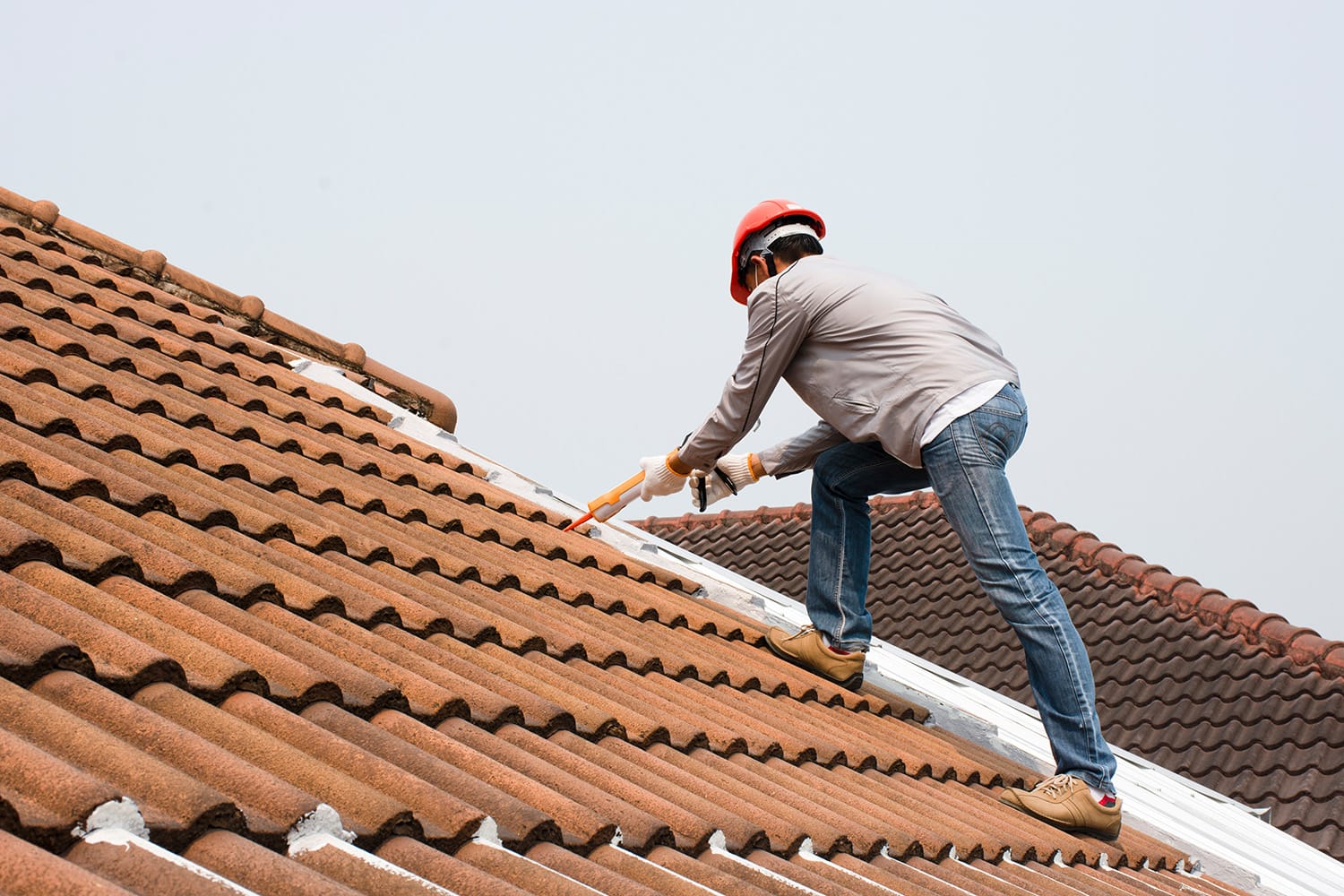
Yes, a tile roof can be repaired. A tile roof repair holds when it finds the leak, which is almost always under the tile in the underlayment, rebuilds that section to the deck instead of caulking the surface, and uses matching tile. Our page on tile roof repair covers each step.
Matching older tile is often the hardest part. RAVASA Roofing keeps its own tile boneyard and sources from a central Florida yard that has supplied tile for more than 50 years, which is how we find discontinued roof tile for older roofs.
What Should Florida Homeowners Know About Tile Roofs?
Florida homeowners should know that hurricanes, insurers, and communities judge a tile roof by its age and installation, not by the tile alone. After one recent storm, Don Campbell inspected a Sarasota tile community of about 110 homes built roughly 25 years earlier; about 40 roofs failed critically, while a shingle neighborhood less than half a mile away saw minimal damage. Our guide to hurricane roof damage explains why age and installation decided the outcome.
Insurers often misread tile roofs. Don has stood on a concrete tile roof with an out-of-state adjuster who called it shingles, and carriers often judge a tile roof by the tile’s age rather than the underlayment’s. Our guide to roof age and insurance explains how documentation helps.
Most gated communities we work in review tile colors and profiles, limit work to daytime hours Monday through Saturday, and require every home in an all-tile community to stay tile. Our guide to tile roof colors and profiles covers approvals.
Are Tile Roofs Maintenance-Free?
No, tile roofs are not maintenance-free. A tile roof needs more maintenance than most owners are told at the sale, and our page on tile roof myths corrects the common misconceptions.
What Are the Disadvantages of Tile Roofs?
A tile roof has four disadvantages, each with a condition. Standard concrete tile weighs 9.5 to 12 pounds per square foot, so the structure must be rated for it. Tile costs more upfront than shingle and pays back over a long ownership. Tile breaks under foot traffic. And the system’s life depends on the underlayment, so a cheap membrane shortens a long-lived tile roof.
Who Makes Roof Tiles in Florida?
Florida homeowners should know that hurricanes, insurers, and communities judge a tile roof by its age and installation, not by the tile alone. After one recent storm, Don Campbell inspected a Sarasota tile community of about 110 homes built roughly 25 years earlier; about 40 roofs failed critically, while a shingle neighborhood less than half a mile away saw minimal damage. Our guide to hurricane roof damage explains why age and installation decided the outcome.
Insurers often misread tile roofs. Don has stood on a concrete tile roof with an out-of-state adjuster who called it shingles, and carriers often judge a tile roof by the tile’s age rather than the underlayment’s. Our guide to roof age and insurance explains how documentation helps.
Most gated communities we work in review tile colors and profiles, limit work to daytime hours Monday through Saturday, and require every home in an all-tile community to stay tile. Our guide to tile roof colors and profiles covers approvals.
Should You Choose Tile or Another Roof?
Tile is the right roof when the home, budget, and ownership timeline favor a long-lived system. Tile costs more than shingle and lasts far longer, so it suits owners who plan to stay; see tile vs shingle roofs. On the water, aluminum standing seam can outperform tile in salt and wind; see tile vs metal roofs. Owners weighing every material can start with roof replacement in Tampa Bay.
Knowing how a tile roof system works, from the underlayment to the ridge, is how you protect the investment, and a tile roofing company for Sarasota and Manatee County builds that system for the long term.
