

Tile Roof Maintenance: What to Know to Protect a Florida Tile Roof
Tile roof maintenance, also called tile roof upkeep, is the routine upkeep that keeps a tile roof watertight between repairs. Most of it protects the underlayment beneath the tile, the layer that actually keeps water out of the home. Knowing what to do, and what never to do, is how a Florida homeowner protects a tile roof for decades. This guide covers what tile roof maintenance includes, the dos, the don’ts, how often each task should happen, and why maintenance matters so much in Florida, from mortar and inspections to cleaning and the cost of skipping it.

Ready to Talk About Your Roof?
Real Feedback From Local Customers


What Does Tile Roof Maintenance Include?
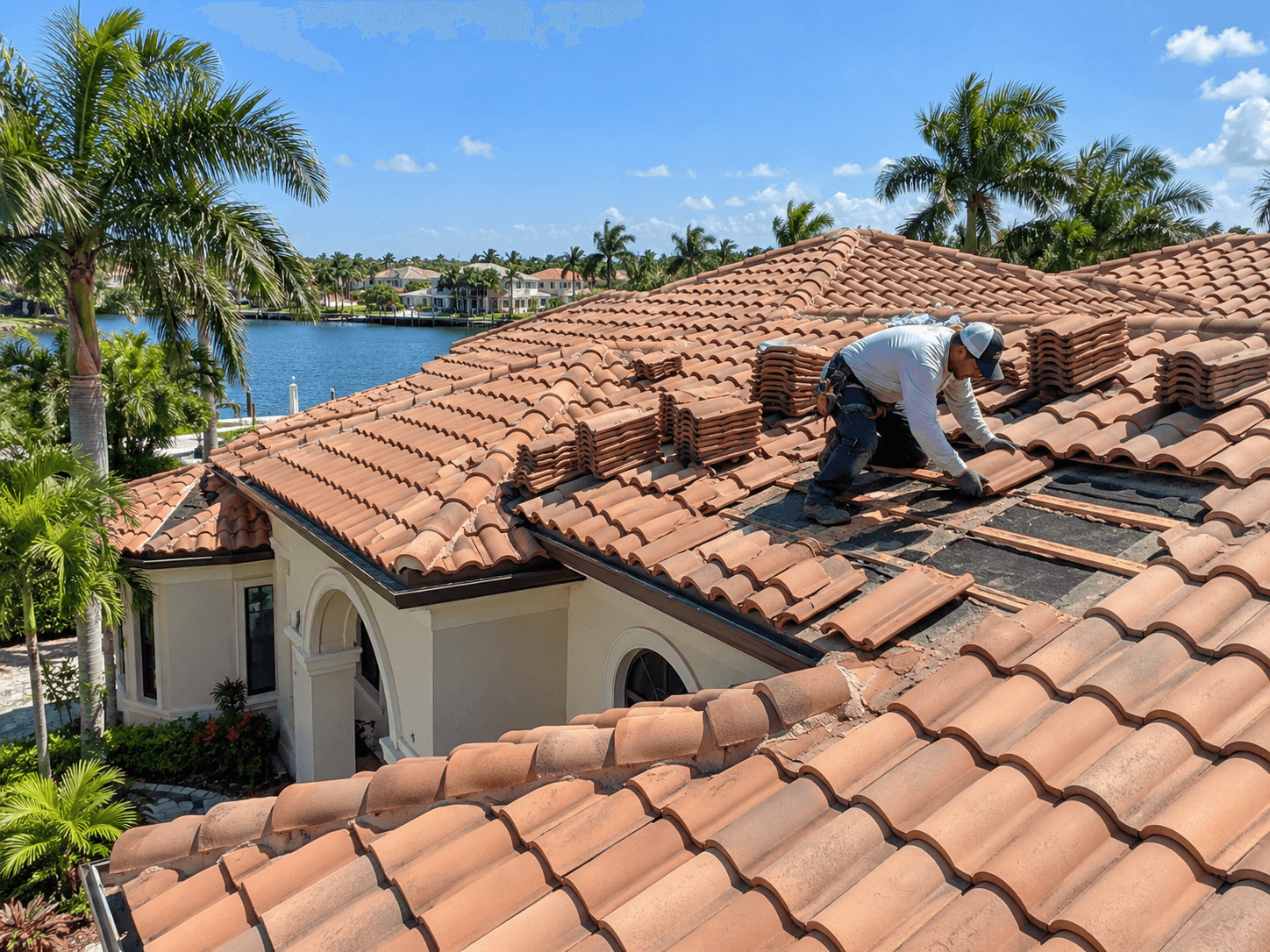
Tile roof maintenance includes periodic inspection, mortar and seal upkeep, debris removal, and safe cleaning, all done without walking on the tile. The same routine applies to concrete tile, clay tile, and Spanish or barrel profiles. Each task protects the underlayment that sits beneath tile roofs, because the underlayment, not the tile, decides how long the roof lasts.
What Are the Dos of Tile Roof Maintenance?
The dos of tile roof maintenance include the following five practices. Each one keeps water from reaching the underlayment.
Do: Schedule the First Inspection at Year Five
A tile roof should get its first professional inspection at year five, unless the installation was poor. After that, you should have the tile roof checked after every major storm or hurricane, because one cracked tile can let water reach the underlayment.
Do: Maintain Ridge and Hip Mortar
Ridge and hip mortar on a tile roof cracks over time, and it usually cracks where wet mortar meets dry tile. In Don Campbell’s experience, most installers set wet mortar against dry tile, and wetting the tile first would give a far better bond, yet that step is almost never done. The major mortar work on a tile roof typically comes near year 20.
Do: Reseal Flashing and Topical Seals
A tile roof has caulked seals along the top of counter-flashing and over lead or Wakaflex flashing. Those topical seals are maintenance items, not repairs, and resealing them before they open keeps water off the underlayment beneath the tile.
Do: Keep Valleys and Gutters Clear
Leaves and debris in tile roof valleys push water sideways and under the tile. Clearing valleys and gutters from a lift or from the ground keeps water moving off the tile roof without anyone stepping on the tile.
Do: Clean With a Soft Wash From a Boom Truck
A tile roof should be cleaned with a low-pressure soft wash applied from a boom truck, so no one has to walk the tile. The boom keeps the crew off the roof while the cleaning solution removes algae and mildew. The guide to tile roof cleaning covers methods and timing.


What Are the Don’ts of Tile Roof Maintenance?
The don’ts of tile roof maintenance include the following four mistakes. Each one breaks tile or opens a path to the underlayment.
Don’t: Walk on Your Tile Roof
Walking on a tile roof is the worst thing an owner can do to it, in Don Campbell’s words. Each step rocks the tile and breaks the foam adhesive bond that holds it to the underlayment, so tiles begin to slide and push their neighbors out of line. A footstep can also tear the underlayment. Standard concrete tile weighs 9.5 to 12 pounds per square foot, yet a single point load still cracks it.
Don’t: Pressure Wash Tile
No, you should not pressure wash a tile roof. High-pressure water forces its way under the tile, and the crews on the roof break tile as they move. In Don Campbell’s experience, most pressure-washing crews that break tile never tell the homeowner, who finds out later when the tile roof leaks.
Don’t: Ignore Cracked or Slipped Tiles
A single cracked or slipped tile lets water reach the underlayment of a tile roof. In golf communities, one bad tee shot can break three or four tiles at once, and a ball that hits a ridge cap, a hip cap, or a valley does the most damage. Replacing broken tile quickly keeps a small problem small.
Don’t: Let Untrained Workers on the Roof
Only your roofer belongs on a tile roof. Satellite installers, painters, and anyone else who walks the tile without training can crack it without noticing, and the damage often surfaces months later as a leak.
How Often Should a Tile Roof Be Maintained?
A tile roof should be inspected professionally at year five, checked after every major storm, and given major mortar and flashing maintenance near year 20. The table below lists the schedule.
| Tile roof task | When | Who |
|---|---|---|
| First professional inspection | Year five | A tile-trained roofer |
| Post-storm check | After every major storm or hurricane | A tile-trained roofer |
| Mortar and flashing work | Near year 20 | A tile-trained roofer |
| Soft-wash cleaning | When algae or debris builds up | A crew working from a boom truck |
This table shows that most tile roof maintenance is occasional, and every task stays off the tile surface. Shingle, metal, and flat roofs follow a different routine, covered in the guide to roof maintenance in Florida.
Why Does Tile Roof Maintenance Matter in Florida?
Tile roof maintenance matters in Florida because it protects the underlayment, the part of the roof that decides its lifespan. Tile roof underlayment lasts 20 to 30 years in Florida heat, and when it fails the whole system fails with it. In Don Campbell’s experience, a tile roof with a two-ply underlayment system and mortar and flashing maintenance near year 20 can reach about 40 years. Documented maintenance also helps when an insurer questions the age of a tile roof.
