

How Long Does a Tile Roof Last in Florida? What to Know to Protect It
A tile roof’s lifespan, also called its life expectancy, is really two numbers: how long the tile lasts and how long the whole roof system lasts. In Florida those numbers sit decades apart, and knowing why is the key to protecting the roof. This guide covers the Florida answer for a tile roof as a system, how long the tile itself lasts, how long the underlayment beneath it lasts, what shortens a tile roof’s life, how to extend it with maintenance, when replacement becomes the better choice, and what homeowners should know about tile roof age and insurance.

Ready to Talk About Your Roof?
Real Feedback From Local Customers


How Long Does a Tile Roof Last in Florida?
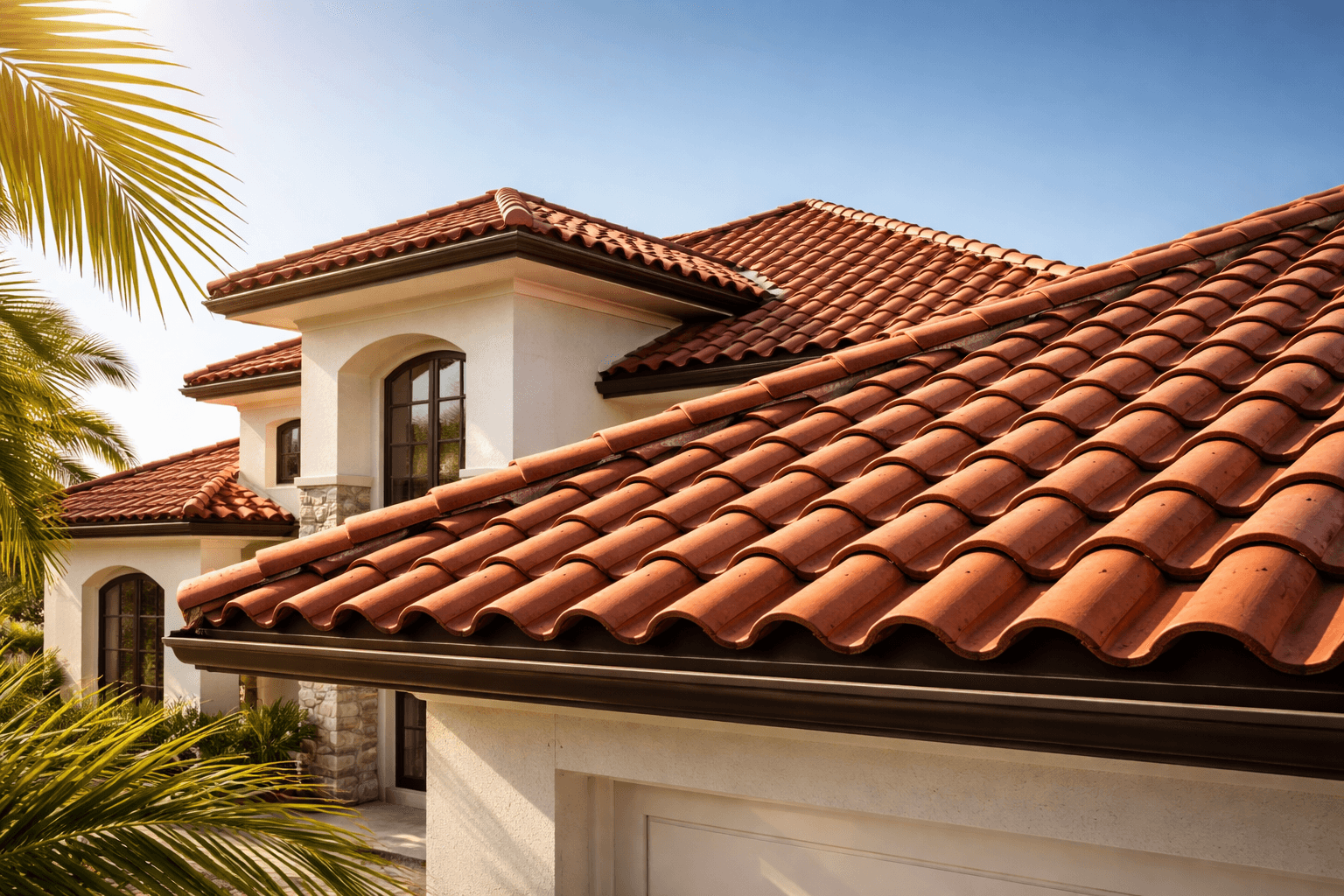
A tile roof in Florida lasts 25 to 50 years as a complete system, even though concrete and clay tile can last much longer. Florida tile roof guides consistently place the system in that 25 to 50 year range. The Tile Roofing Industry Alliance describes the tile itself very differently, as a material that lasts “for centuries rather than decades.” Both statements are true, because they measure different parts of the roof.
If the tile can last 75 years, why does the roof often fail near 25? The answer is the layers beneath the tile. The underlayment, the flashing, and the fasteners wear out long before the tile does, and when a tile roof fails around year 25 it is almost always one of those components, not broken tile. Understanding how tile roofs are built explains why the system, not the tile, sets the real lifespan.
How Long Does the Tile Itself Last?
Roof tile lasts 50 to more than 100 years, depending on the material. The table below compares the three main tile types.
| Tile type | Typical lifespan | Note |
|---|---|---|
| Concrete tile | 50 to 75 years | The most common roof tile in Florida |
| Clay tile | 75 to more than 100 years | Includes barrel, Spanish, and terracotta profiles |
| Synthetic or composite tile | Too new to measure | Current products have not yet needed repair work |
This table shows that every common tile outlasts the underlayment beneath it, which is why tile roofs are replaced long before the tile wears out.
How Long Does a Concrete Tile Roof Last?
Concrete tile lasts 50 to 75 years, but a concrete tile roof as a system lasts 25 to 50 years in Florida. Concrete tile is the workhorse of Florida roofs, heavy and durable, and it covers many of the gated communities in Tampa Bay and Sarasota. Its lifespan as a roof depends almost entirely on the underlayment and installation beneath it.


How Long Does a Clay Tile Roof Last?
Clay tile lasts 75 to more than 100 years, making it the longest-lived roof tile in Florida. Barrel tile, Spanish tile, and terracotta are all clay tile profiles. Clay tile is lighter than concrete, and in Don Campbell’s experience clay tile roofs directly on the Gulf have failed worst when a hurricane hits, so exposure matters as much as material for a clay tile roof.
How Long Does Tile Roof Underlayment Last?
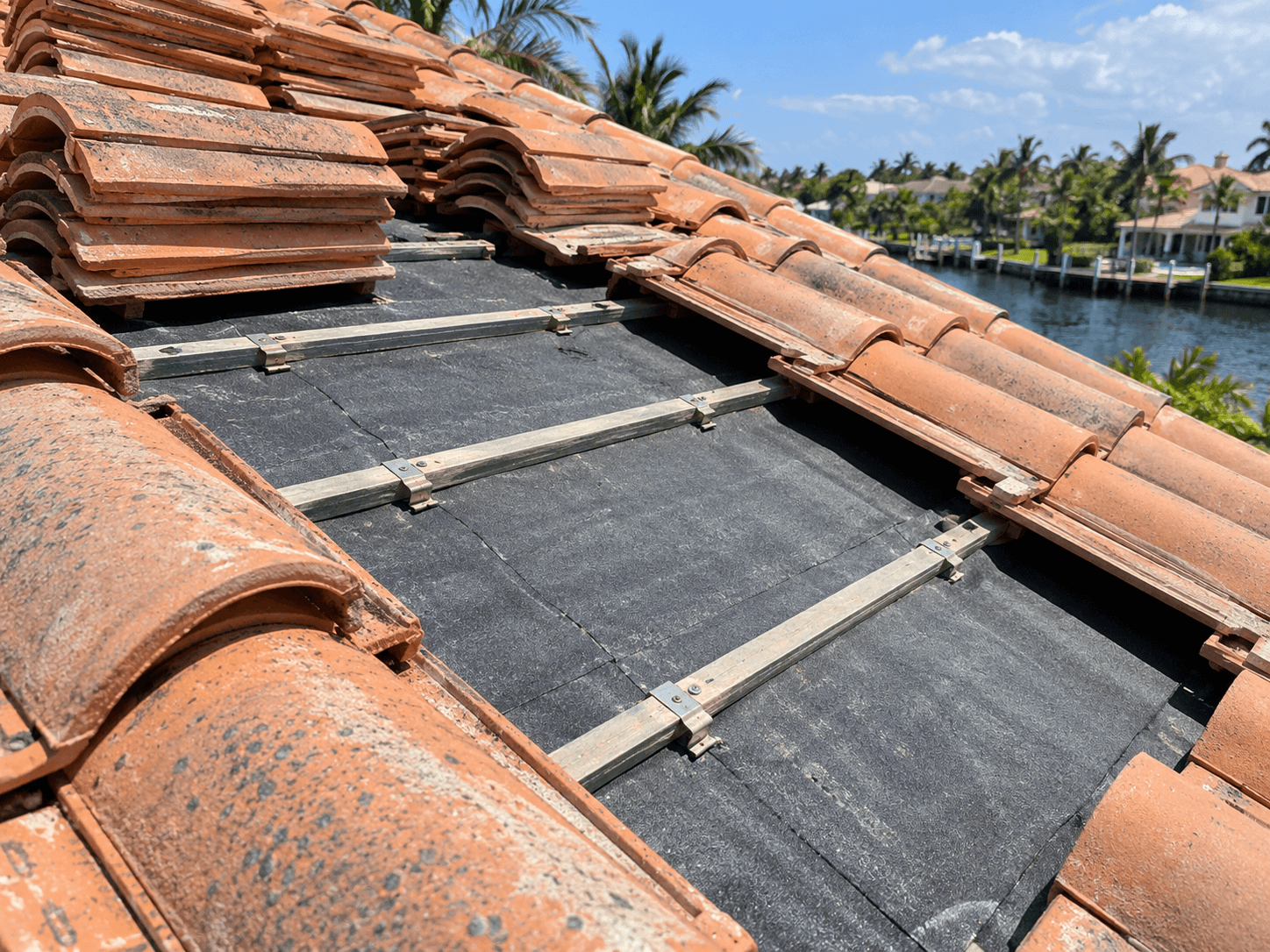
Tile roof underlayment lasts 20 to 30 years in Florida's heat and humidity. When the underlayment wears out, the tile roof starts to leak, even if every tile looks perfect. That is why the system fails around year 25 while the tile keeps going.
Many Florida tile roofs now 20 to 25 years old show the pattern clearly. In Don Campbell's experience, first-generation peel-and-stick underlayment and first-generation tile foam adhesive wore out earlier than expected, and newer generations of both products last longer and hold tile better. The table below shows how each component of a tile roof ages.
| Component | Typical service life | Note |
|---|---|---|
| Tile | 50 to more than 100 years | Concrete and clay, by type |
| Underlayment | 20 to 30 years | Sets the lifespan of the tile roof system |
| Ridge and hip mortar, lead or Wakaflex flashing | Major maintenance near year 20 | Repairable without replacing the roof |
| Pipe boots and sealants | Varies with sun exposure | Checked at every inspection |
This table shows that the underlayment is the component that decides when a tile roof needs replacing. The guide to tile underlayment covers its types and layers.
How Can You Extend the Life of a Tile Roof?
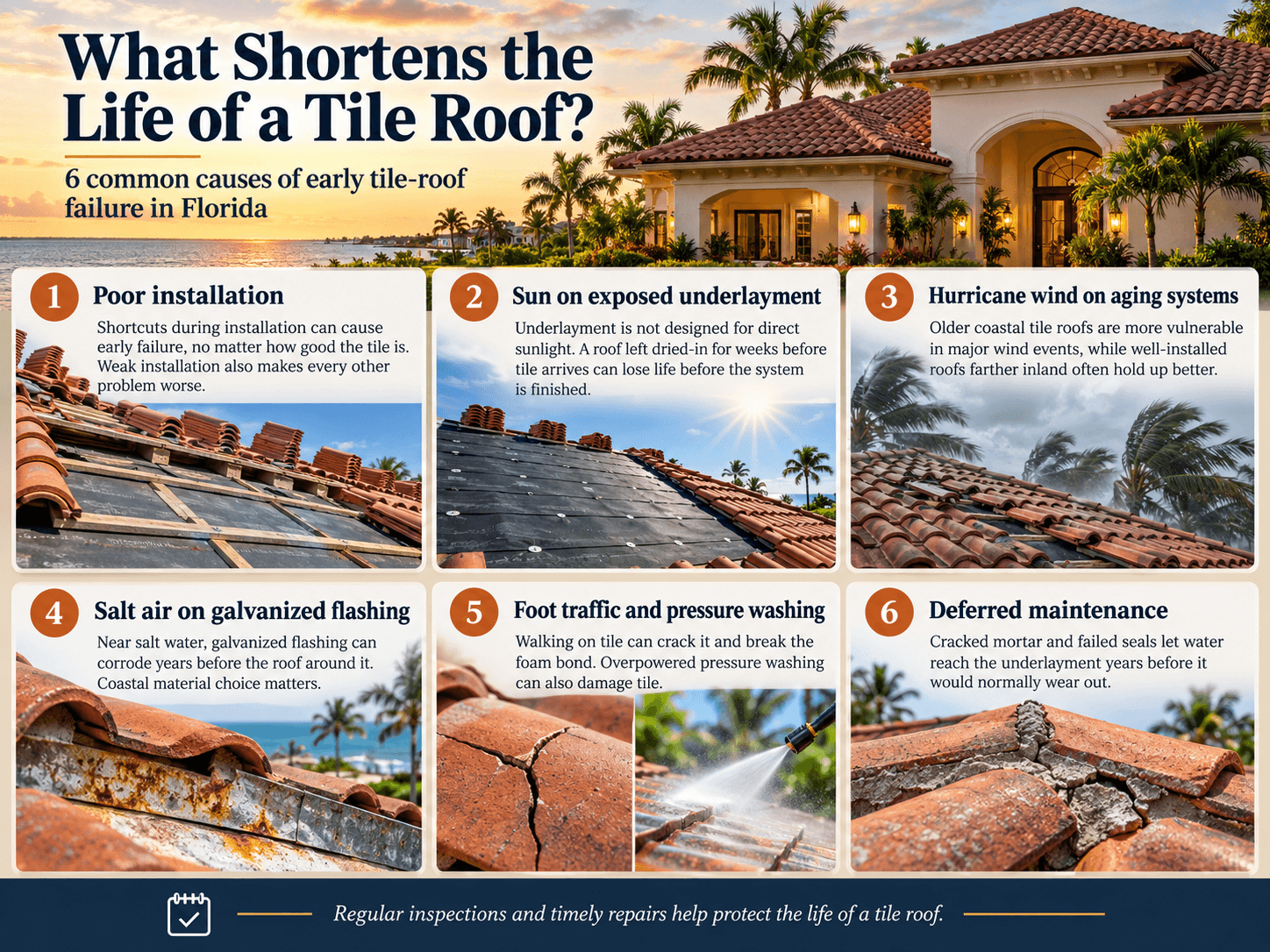
You can extend the life of a tile roof by protecting the underlayment and maintaining the parts that wear first. In Don Campbell's experience, a tile roof built with a two-ply underlayment system and given mortar and flashing maintenance near year 20 can reach about 40 years. You should schedule the first professional inspection at year five, have the roof checked after every major storm, and keep everyone except your roofer off the tile. Those habits are the core of maintaining a tile roof.

When Does a Tile Roof Need to Be Replaced?
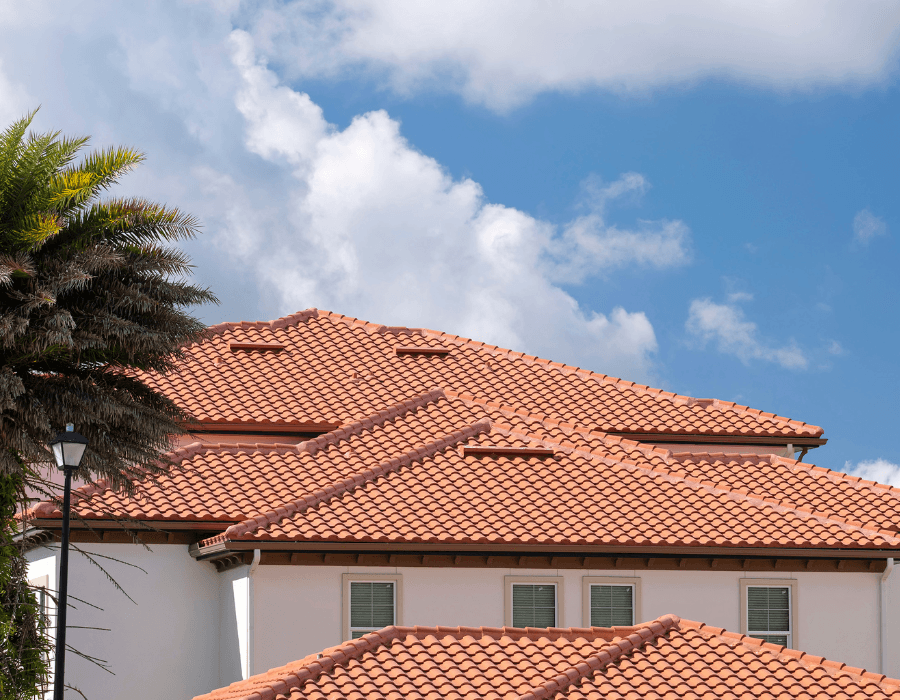
A tile roof needs to be replaced when the underlayment reaches the end of its life, not when the tile does. In Florida that point commonly arrives around year 25 on a single-ply system. Don Campbell also finds that repairs on tile roofs between 18 and 22 years old often stop paying for themselves, which makes that range a decision point rather than a lifespan. Leaks under intact tile, slipping tile, cracked ridge mortar, and ceiling stains with no broken tile above them all point to underlayment that has run its course.
What Should Florida Homeowners Know About Tile Roof Age?
Florida homeowners should know that insurers read roof age, and tile roof age is often misread. Many Florida carriers ask for an inspection or a replacement once a roof reaches a certain age, and the tile can look decades younger or older than the underlayment beneath it. A documented underlayment replacement resets the clock on the part of the roof that actually decides its life. Don Campbell once walked a concrete tile roof with an out-of-state adjuster who called the tile shingles and was unsure how to judge it, which shows why records matter. The guide to roof age and Florida insurance explains the 15-year letters.
