

Emergency Roof Repair in Tampa Bay: Protect the Home First, Fix It Right Second
Emergency roof repair, sometimes called urgent roof repair, stops water from entering a home right away and plans the permanent repair after the roof is diagnosed. If water is coming in now, contain it, keep everyone off the roof, and call a roofer. This page explains what emergency roof repair is, when a roof leak is an emergency, what to do while you wait, and how emergency tarping works. It then covers how fast RAVASA Roofing responds, what happens after the emergency, what it costs, and what Tampa Bay homeowners should know after a storm.


What Is Emergency Roof Repair?
Emergency roof repair is the immediate protection of a roof that is letting water in, through containment, tarping, or a temporary dry-in, followed by a planned permanent repair. The goal is to “protect the home first” and fix the roof right second. Emergency roof repair is the first stage of complete roof repair in Tampa Bay, not a substitute for it.
Is a Roof Leak an Emergency?
A roof leak is an emergency when water is actively entering the living space or the structure is at risk. Four signs mean a roof leak needs emergency roof repair:
A slow stain with no active drip is urgent, but it is not an emergency.
What Should You Do While Waiting for a Roofer?
While waiting for a roofer, you should contain the water, protect your belongings, and document the damage from the ground. Five steps limit the damage before emergency roof repair arrives:
- Place buckets and towels under every drip, because standing water spreads into flooring and drywall.
- Relieve a bulging ceiling by making a small hole at its lowest point over a bucket, because trapped water can bring the whole section down.
- Move furniture, electronics, and valuables out of the wet area, because they are the easiest losses to prevent.
- Photograph the damage inside and outside from the ground, because the photos support any insurance claim.
- Stay off the roof, because a wet roof is dangerous and walking on tile breaks it and makes the leak worse.
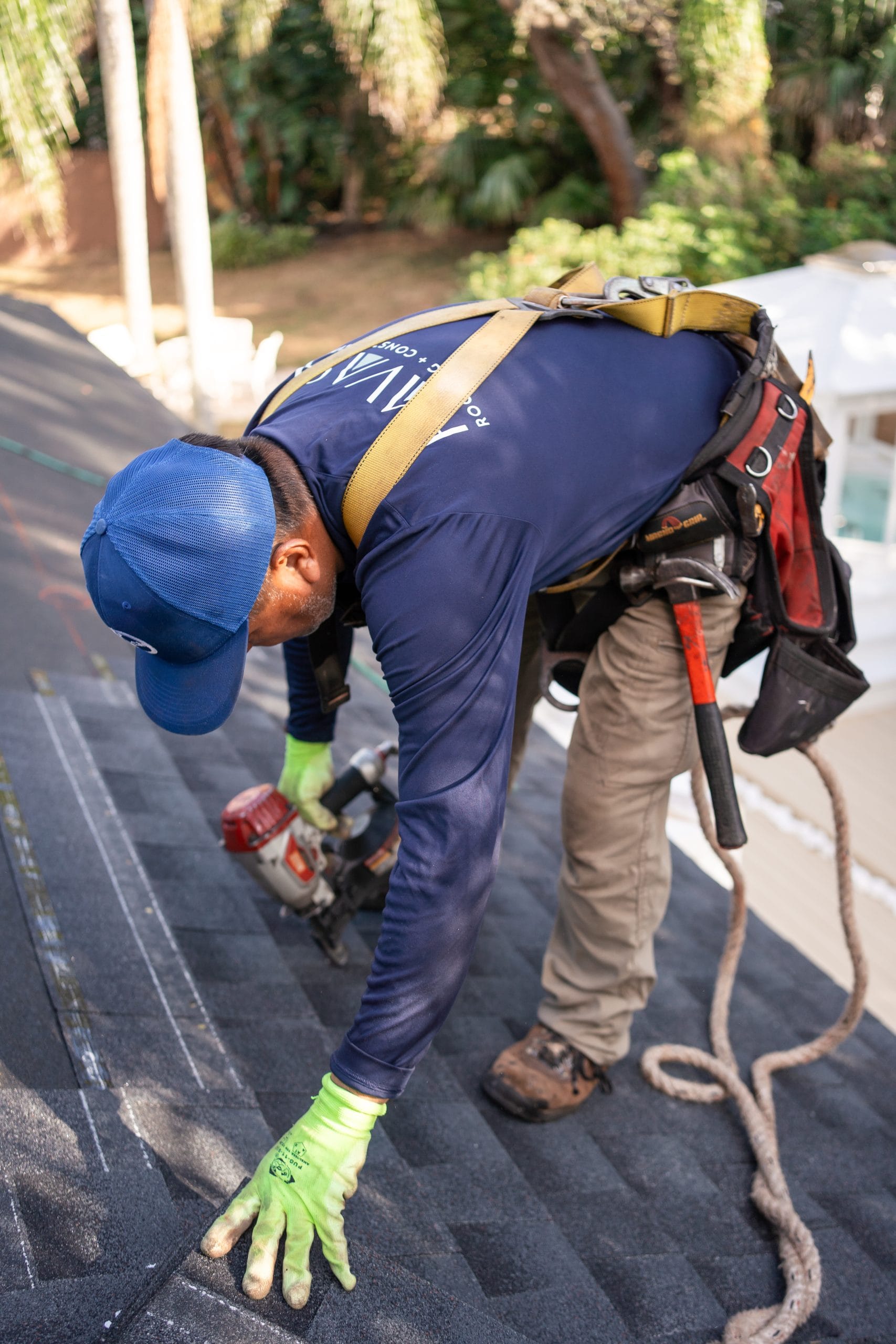
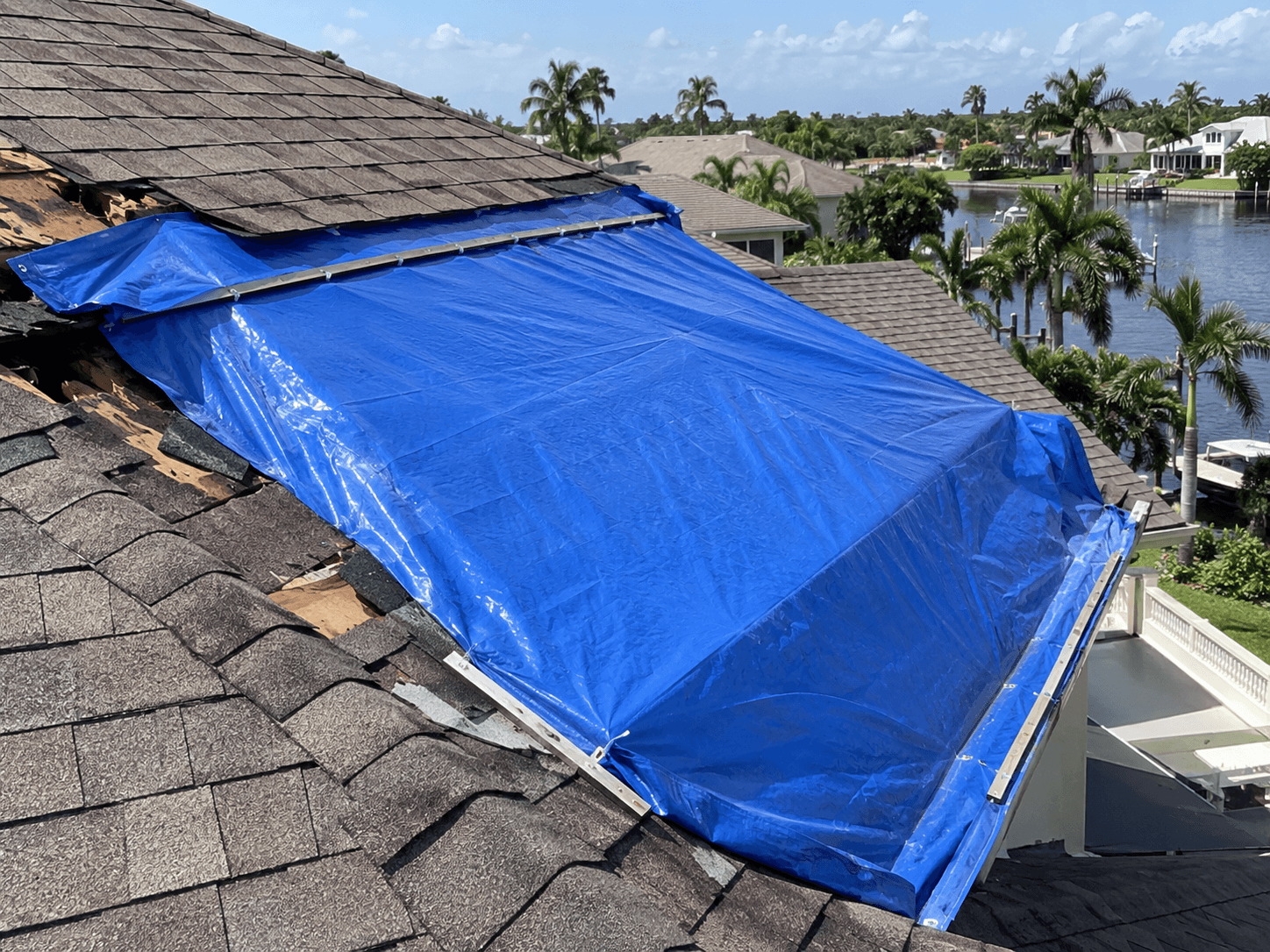
How Does Emergency Roof Tarping Work?
Emergency roof tarping covers the damaged area with a heavy tarp that extends up under the intact roof above it, so water sheds over the tarp instead of under it. The tarp is secured in a way that limits new holes in the roof. Tile roofs need extra care: the tile is lifted or protected rather than walked over, so the tarp does not cause new breakage. A tarp is temporary. In our experience, underlayment and tarps are not designed to sit in direct Florida sun for long, so the permanent repair should follow quickly.
How Fast Does RAVASA Roofing Respond?
RAVASA Roofing contacts a homeowner the same day an emergency is reported and typically has someone at the home within 24 hours. After a storm, speed and a clear plan matter as much as the repair itself. In our experience, while one roof is being inspected after a storm, neighbors often gather in the street and ask for the same help. Each homeowner deserves a calm assessment and a clear next step, and that is what we give them.

What Happens After the Emergency Repair?
After the emergency repair, the roof is diagnosed and the permanent repair is planned. Diagnosis follows the same order as any leak: inside where the water showed, then the attic, then the roof. The entry point is found and rebuilt down to the deck, so the section is effectively new.
A tarp is not a repair. The permanent fix should follow within days, not months, because sun and wind wear out temporary protection quickly. Our page on roof leak repair explains how the permanent repair is done.
How Much Does Emergency Roof Repair Cost?
Emergency roof tarping for a typical Florida home commonly costs $300 to $1,500. The final price depends on the size of the opening, the roof type, access to the damaged area, and the timing of the call. Tile roofs take longer to protect because the tile must be lifted or shielded rather than walked on.
What Should Tampa Bay Homeowners Know After a Storm?
Tampa Bay homeowners should know that documentation, insurance limits, and a local roofer protect them most after a storm. Photograph the damage before anything is removed, and keep every receipt for emergency work.
Homeowners insurance covers sudden storm damage, but standard policies exclude wear and tear, faulty workmanship, and deferred maintenance. Our guide to roof insurance claims explains how the process works from the first call to the adjuster’s visit.
Hire a roofer who lives and works in the community. A local contractor is still there when a warranty question comes up next year. Our guide to free roof offers explains why door-to-door promises deserve a careful second look.

Does Insurance Pay for Emergency Tarping?
Insurance may pay for emergency tarping, depending on the carrier and the policy. Many policies expect homeowners to take reasonable steps to prevent further damage after a storm. Keep the receipts and photos, and confirm the coverage with your carrier before assuming it.
Should You Sign With a Roofer Who Knocks After a Storm?
You should not sign with a roofer who knocks after a storm until you have verified a local license, a local address, and every term of the agreement. Take time before signing anything, including a public adjuster agreement. In our experience, door-to-door public adjuster contracts commonly run 12 to 24 months.
Can You Patch a Roof Yourself in an Emergency?
You can contain a roof leak yourself from inside the home, but you should not climb onto a wet or tile roof to patch it. Buckets, towels, and moving belongings are safe and effective. Any patch applied to the roof is temporary, and a fall from a wet roof is far more costly than the leak.
