
Roof Repair Methods: How to Fix a Leaking Roof So It Stays Fixed
Roof repair methods, the ways a roofer can stop a roof leak, fall into two families: surface patches and rebuilt repairs. Knowing the difference is how a homeowner protects the money spent on a fix, because one method lasts and the other buys time. This guide explains the best way to fix a leaking roof, what a topical repair is, and why roofing cement fails in the Florida sun. It then describes the bare-wood repair, compares the two methods, explains why a repair should cover a whole valley or wall, and lists the mistakes that make roof leaks worse. It closes with what homeowners should know before choosing a repair method, including when a temporary patch is the right call.


What Is the Best Way to Fix a Leaking Roof?
The best way to fix a leaking roof is to find where the water enters and rebuild that section from the deck up, because sealants on the surface only buy time.
A roof leak begins below the covering, in the underlayment or flashing. A repair that never reaches those layers leaves the entry point open, so the leak returns with the next heavy rain. The rest of this guide explains why, method by method.
What Is a Topical Roof Repair?
A topical roof repair is a fix applied on top of the roof covering, using caulk, roofing cement, or sealant, without addressing the layers underneath. Four topical methods are common:
- Roofing cement is spread over a roof leak at a flashing or a nail, and it hardens and cracks with heat and time.
- Caulk and sealant are run along seams over a roof leak, and they shrink and separate as the roof expands and contracts.
- Liquid rubber coatings are brushed or sprayed over a roof leak, and they cover the surface without reaching the failed layer below.
- Roofing tape is pressed over a roof leak at a seam or puncture, and its adhesive weakens in sun and rain.
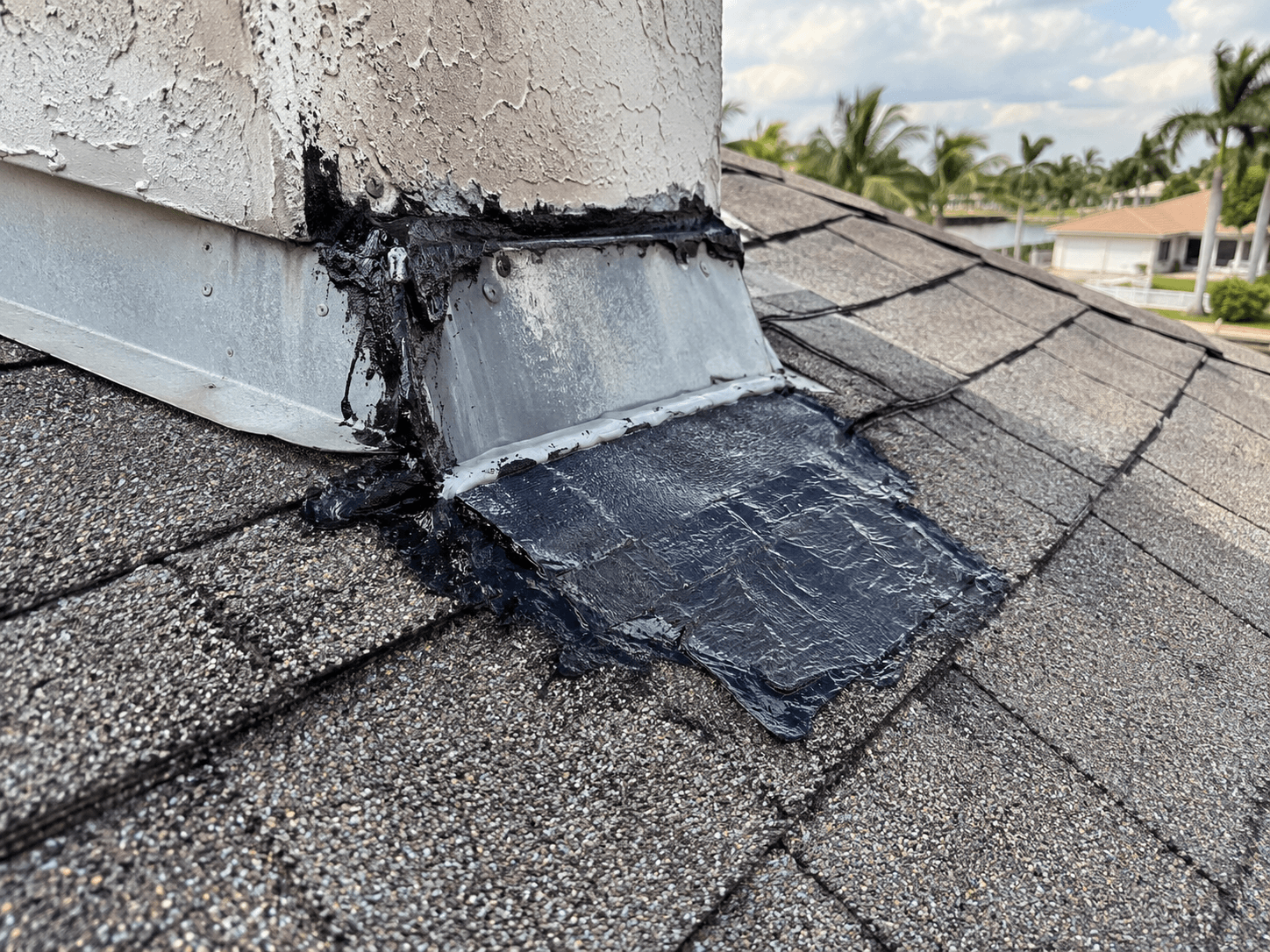
Each topical method treats the visible surface, while the roof leak continues underneath. In our experience, topical repairs are commonly sold for $300 to $500, which is why they are so common and why so many leaks return.
Why Does Roofing Cement Fail in the Florida Sun?
Roofing cement fails in the Florida sun because it is an adhesive meant to sit between flashing and shingles or membrane, not a surface coating. In 33 years of diagnosing roof leaks, Don Campbell has found that cement left exposed to direct sun can soften, flow like a liquid, and reopen the gap it was covering.
Roofing cement also matters where it cannot be seen. Fasteners under a shingle need to be fully buttered with cement so the shingle seals completely. In our experience, a roofer who skimps on cement leaves small voids around those fasteners, and the voids become leaks years later.
What Is a Bare-Wood Roof Repair?
A bare-wood roof repair removes the failed area “down to the bare wood” of the roof deck and rebuilds the underlayment, flashing, and covering so that section is effectively new. A bare-wood repair follows six steps:
- Remove the roof covering in the damaged section down to the deck.
- Inspect and replace any rotted or damaged decking.
- Install new underlayment over the sound deck.
- Replace flashing wherever it is worn or corroded.
- Reinstall the covering, puzzling shingles or tile back into the surrounding roof.
- Seal every fastener correctly so no voids remain.
A bare-wood repair is permanent when the entry point has been diagnosed correctly. Rebuilding the wrong section, however carefully, leaves the leak in place.

How Do Topical and Bare-Wood Repairs Compare?
Topical and bare-wood repairs differ in what they fix, what they cost, and how long they last. The table below compares the two methods side by side:
| Factor | Topical patch | Bare-wood repair |
|---|---|---|
| What gets repaired | The visible surface | The underlayment, flashing, and covering down to the deck |
| Typical price | Commonly $300 to $500 | RAVASA Roofing shingle repairs start at $1,250 |
| How long it lasts | Temporary, often until the next heavy rain | The remaining life of the roof section |
| Warranty | Often none | RAVASA Roofing repairs carry at least 1 year |
| Best use | A stopgap during a storm | A permanent repair |
This table shows why the cheaper method often costs more over time: a topical patch is frequently paid for twice, while a bare-wood repair is paid for once.
Why Should a Repair Cover the Whole Valley or Wall?
A repair should cover the whole valley or the full run of wall flashing because water entering at the top can surface at the bottom. A stain at the base of a valley does not mean the valley failed at its base.
The principle behind this is to “think like water.” Water runs downhill, then sideways, and a single nail can turn it in a new direction, so the point of entry may sit far above the visible damage. RAVASA Roofing therefore rebuilds the entire valley, or the full run of flashing from top to bottom, rather than the section where the stain appears. To see how water travels across a roof, read think like water, and for valley-specific repairs, see roof valley leaks.


What Repair Mistakes Make Roof Leaks Worse?
The repair mistakes that make roof leaks worse are the ones that treat the surface or the wrong spot. Five mistakes appear again and again in the repairs we are called to fix:
- Caulking over tile leaves the roof leak in place, because the leak on a tile roof is under the tile.
- Skimping on cement at fasteners leaves voids that turn into roof leaks years after the work is done.
- Repairing only the bottom of a valley misses water entering higher up, so the roof leak returns.
- Patching over corroded galvanized flashing on a coastal home hides metal that keeps failing beneath the patch.
- Misdiagnosing a chimney or stucco leak as a roof leak spends the repair budget on the wrong structure.
Each of these mistakes looks like a repair on the day it is done. The roof leak tells the truth at the next storm.
What Should Homeowners Know Before Choosing a Repair Method?
Homeowners should know what will be done beneath the surface before they choose a repair method. A written estimate should name the entry point and state the scope of work down to the deck. If it describes only sealant or caulk, the repair is topical, whatever it is called.
In our experience, homeowners often call several roofers before anyone offers a repair quote at all, so the first answer is not always the best one. Ask what layer will be rebuilt, how the entry point was found, and what the warranty covers. A proper repair follows the same standard as complete roof repair in Tampa Bay. For the full process of roof leak repair, and for the diagnostic steps behind how to find a roof leak, see those guides.
Is a Temporary Roof Patch Ever the Right Choice?
Yes, a temporary roof patch is the right choice during an active storm or until a permanent repair can be scheduled. Containment and a tarp protect the home while the weather passes, and the permanent repair follows the diagnosis. For storm situations, see emergency roof repair and tarping in Tampa Bay.
Can You Fix a Roof Leak From the Inside?
You can contain a roof leak from the inside, but you cannot stop water from entering the roof from the inside. Buckets, towels, and relieving a bulging ceiling protect the home. The entry point is on the roof, and only a repair there stops the leak.
Does Flex Seal Work on a Roof Leak?
A spray coating such as Flex Seal can slow a small surface leak for a short time. It does not reach the underlayment or the flashing where the water enters, so the leak commonly returns, and a permanent repair is still needed.
