
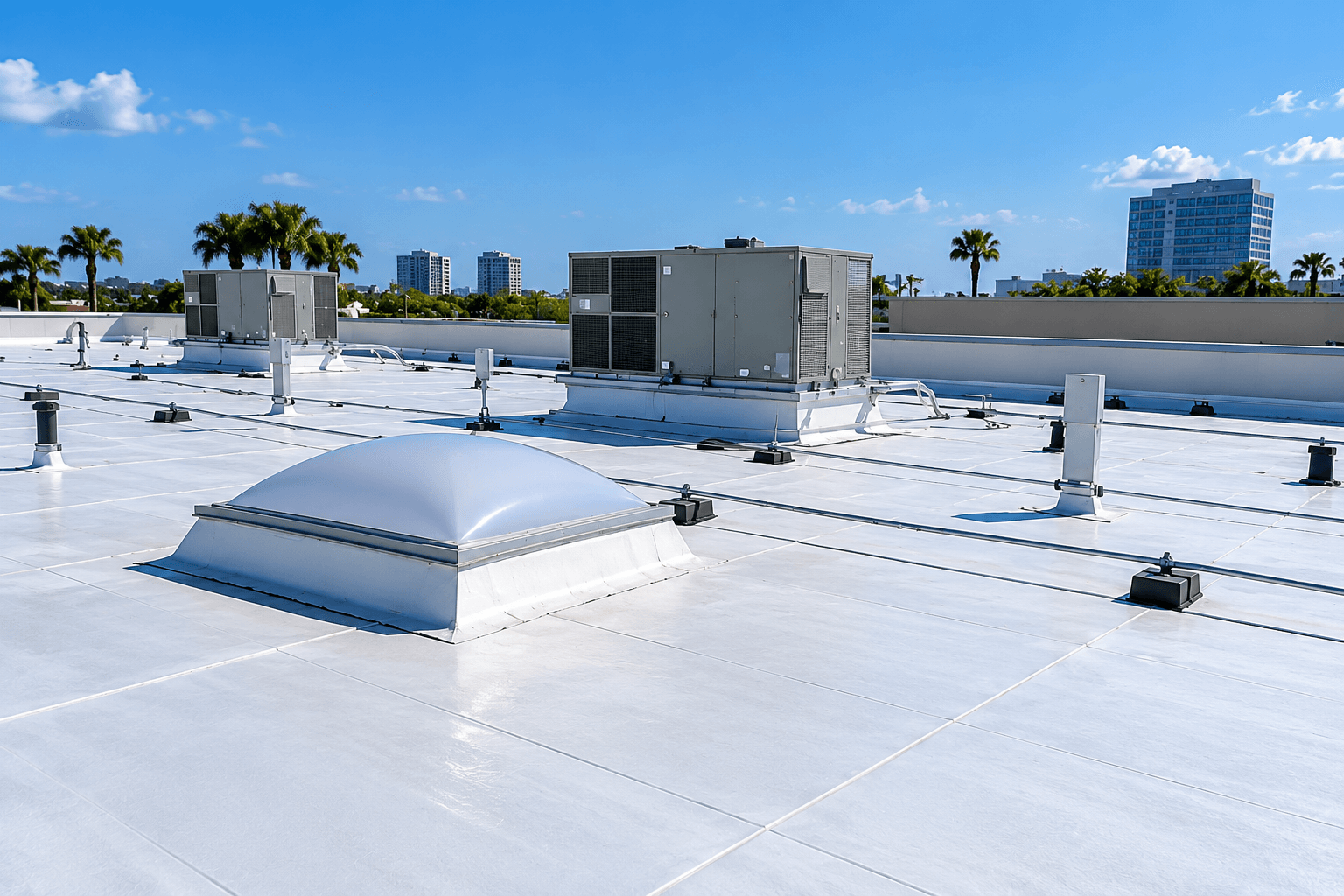
Commercial Roof Repair in Tampa Bay: What Owners Should Know to Protect a Building
Commercial roof repair, also called commercial roofing repair, finds and permanently fixes leaks in the roofs of warehouses, retail centers, offices, and condo buildings. Property owners need to know how their roof fails to protect the tenants, inventory, and building beneath it. The right repair depends on the roof system, and metal warehouse roofs have a leak pattern of their own. Flat roofs follow a step-by-step repair method, speed matters more than on a home, and cost and the repair-or-replace decision follow from an inspection. Owners hiring a roofer should know what to check, and finished projects show the work.

Ready to Talk About Your Roof?
Real Feedback From Local Customers


What Does Commercial Roof Repair Include?
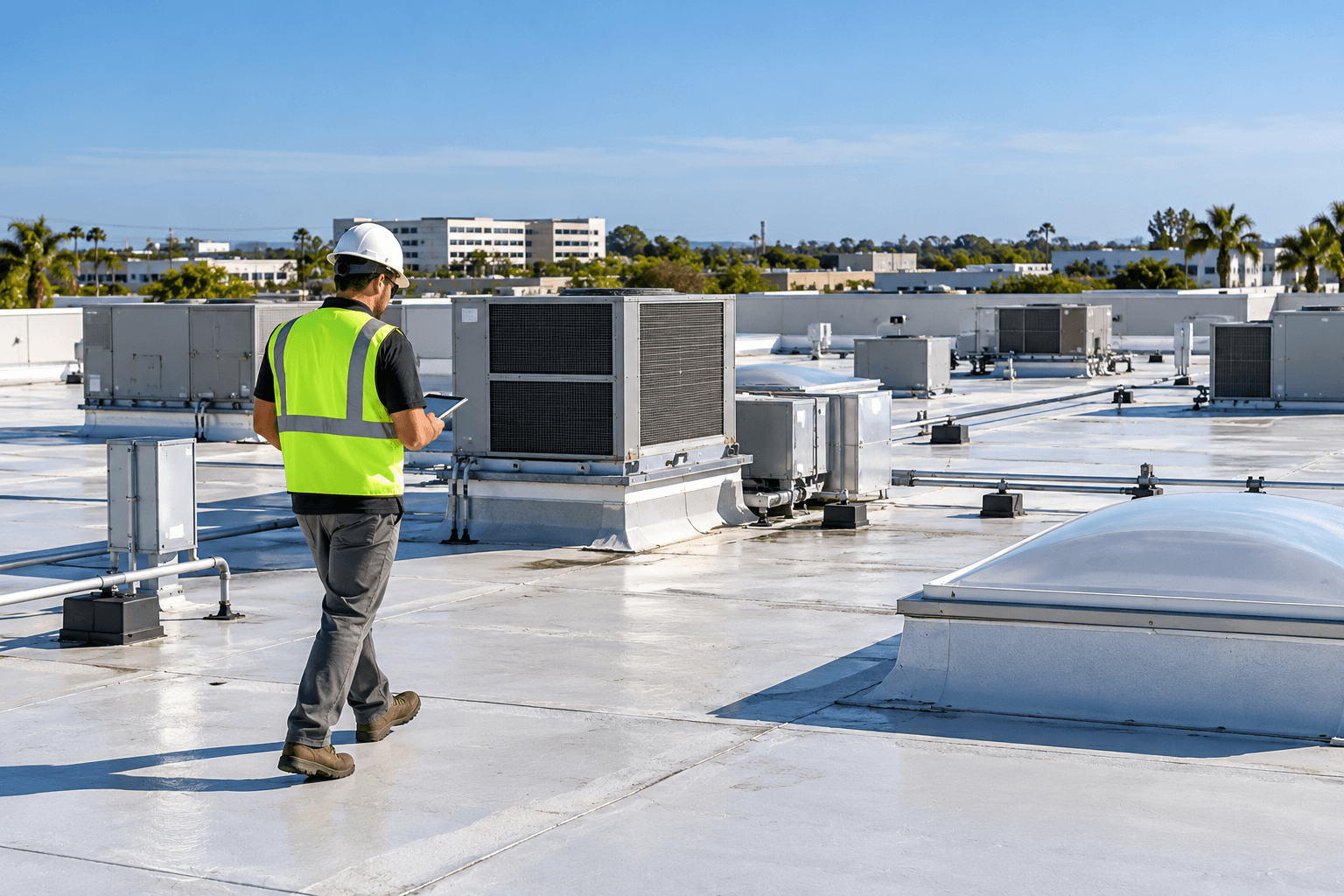
Commercial roof repair includes finding the true source of a leak, repairing the membrane or metal panels, resealing fasteners and skylights, and rebuilding flashing so the repair holds. It treats the roof as a system rather than patching the wet spot on a ceiling tile.
RAVASA Roofing repairs commercial roofs on warehouses, retail centers, offices, and HOA and condo buildings. The same diagnosis-first approach behind our residential roof repairs in Tampa Bay applies to every commercial roof we touch.
What Types of Commercial Roofs Need Repair?
Four types of commercial roofs need repair most often: TPO, modified bitumen, exposed-fastener metal, and standing seam metal. RAVASA Roofing repairs all four commercial roof systems.
| Roof system | Where it is used | Where it usually fails |
|---|---|---|
| TPO commercial roof | Low-slope retail, office, and condo roofs | Seams, penetrations, and ponding areas |
| Modified bitumen commercial roof | Low-slope commercial and multifamily roofs | Seams, flashing, and ponding areas |
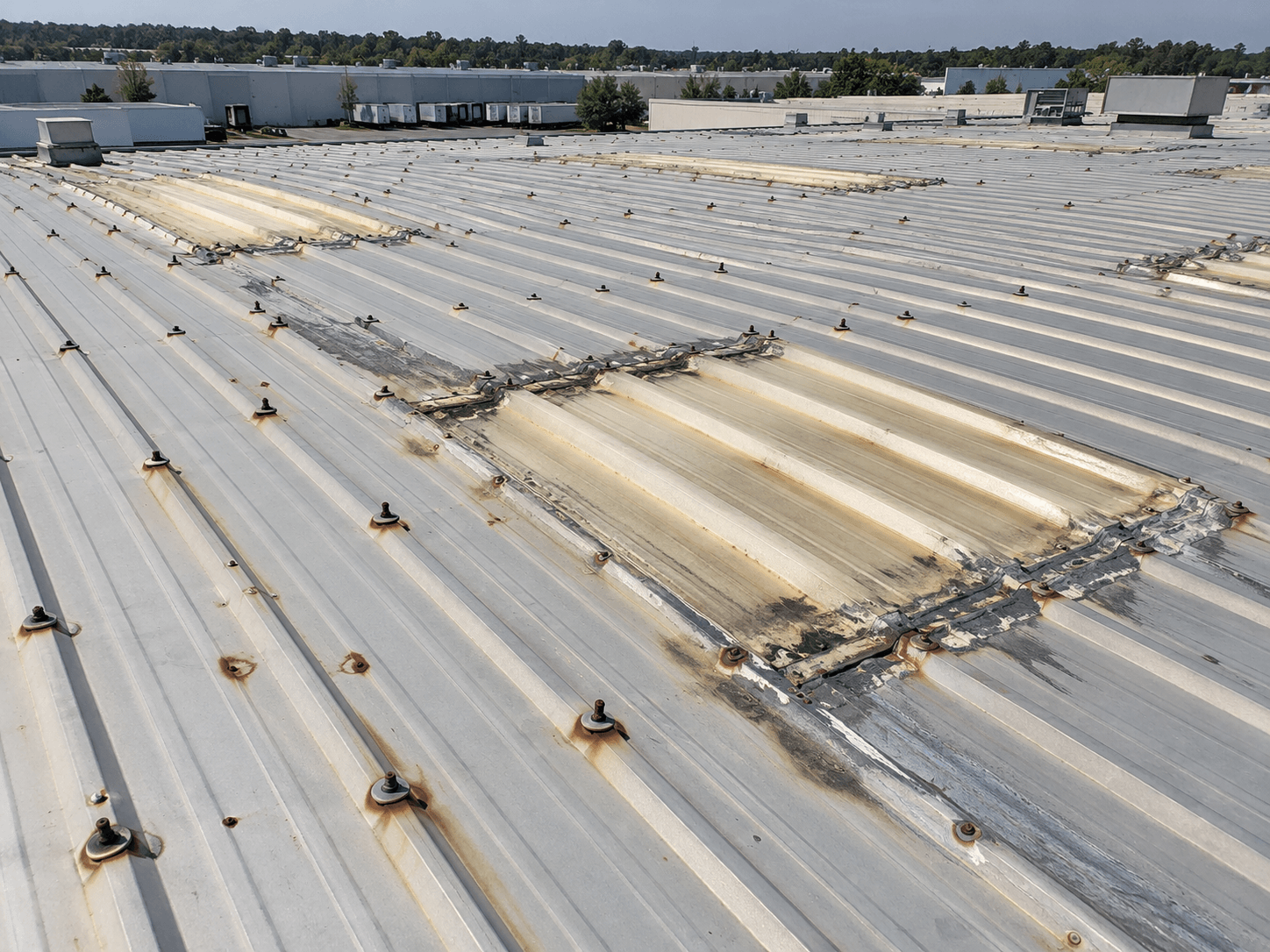
| Exposed-fastener metal (R-panel) commercial roof | Warehouses and industrial buildings | Fasteners, fiberglass skylights, and panel laps |
| Standing seam metal commercial roof | Offices and newer commercial buildings | Rarely leaks when installed correctly |
This table shows that each commercial roof system fails in predictable places, which is where a repair inspection starts. Standing seam roofs use concealed fasteners, which is why they so rarely leak; our guide to standing seam metal roofs explains the difference.
Why Do Metal Warehouse Roofs Leak?
RAVASA Roofing contacts Lakewood Ranch homeowners the same day they call or submit an online request and typically schedules the visit for the next day. That timing applies on both sides of the county line. In Don Campbell’s experience, many roofing companies tell homeowners that a sales representative will call back within 24 to 72 hours, which can leave an active leak unaddressed for days. RAVASA’s faster response helps homeowners get the roof inspected sooner so the source of the problem can be identified and the next step can be planned without unnecessary delay.
How Do You Repair a Commercial Flat Roof?
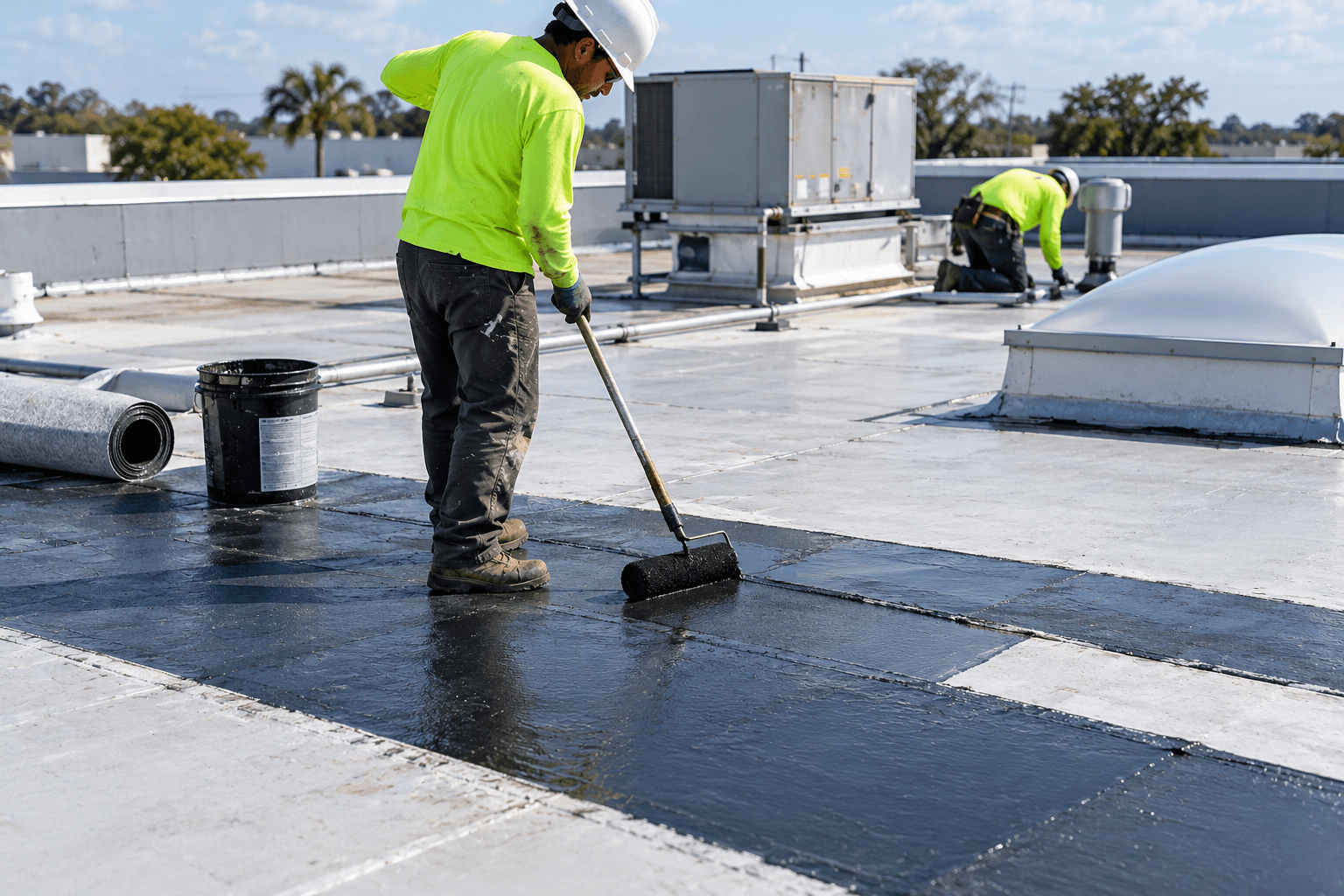
You repair a commercial flat roof by finding the breach, cutting out damaged membrane, and installing a properly welded or torched section that matches the system. A commercial flat roof repair follows these steps:
- Locate the breach by tracing moisture, not by guessing from the interior stain.
- Remove damaged membrane down to sound substrate.
- Install matching TPO or modified bitumen with the correct overlap, heat-welded or torched in place.
- Reflash penetrations, curbs, and roof edges around the repair.
- Correct ponding where the drainage allows it.
A coating rolled over an unrepaired leak hides the problem rather than solving it, and the leak returns once the coating ages. That difference between a surface fix and a real repair is the same one we explain in how roof repairs should be done.
How Fast Can a Commercial Roof Leak Be Repaired?
A commercial roof leak can be assessed the day after you call, because RAVASA Roofing makes contact the same day and schedules the appointment for the next day. Occupied buildings cannot wait through a sales cycle while tenants move inventory away from a drip.
When water is actively entering, the first visit protects the building and its contents, and the permanent repair follows the assessment. Owners facing storm damage can read about emergency roof tarping in Tampa Bay and how temporary protection works.
How Much Does Commercial Roof Repair Cost?
Commercial roof repair cost depends on the roof system, the square footage, access and height, the number of penetrations and skylights, and tenant scheduling. A repair on an accessible TPO roof with a single breach costs far less than resealing fasteners and skylights across a full warehouse.
RAVASA Roofing provides a written, itemized estimate after inspecting the roof, so owners see exactly what each repair covers before work begins.
When Should a Commercial Roof Be Replaced Instead of Repaired?
A commercial roof should be replaced instead of repaired when repeated repair costs approach the value of the roof’s remaining life. In Don Campbell’s experience, almost every roof is repairable; the real question is whether the repair is worth the money.
A documented inspection answers that question with facts: the age of the system, the condition of the membrane or panels, and how widespread the damage is. Owners can learn what that roof inspection covers before scheduling one.
What Should Property Owners Know Before Hiring a Commercial Roofer?
Property owners should know that a commercial roofer must be fully insured, must document the work, and must specify materials for the building’s exposure. Every RAVASA Roofing crew on a commercial roof works under workers’ compensation coverage, and the company carries general liability insurance on each job.
Documentation protects owners after storms. Photos and written findings from before and after a repair support any future claim, as our guide to roof insurance claims explains.
Coastal buildings need corrosion-resistant fasteners and flashing, because salt air destroys galvanized metal years early. Our guide to coastal roofing materials covers stainless, copper, and aluminum options.
